



Backyard Patios
Backyard concrete patios
The patio is the outdoor room you use most. We size it for how you actually live — the table, the grill, the fire pit — and build every one on the same standard, from the gravel up.
See what your patio would cost
Put in your size, pick a finish, and tell us if old concrete has to come out. Our patio calculator gives you your price, built from what we actually charge, in about a minute.
Our standard, under every patio
- Your siding gets covered firstWe plastic off the siding before the truck shows up, so concrete splatter never has to be cleaned off later.
- 6 to 8 inches of compacted gravelThe base is what keeps a slab from settling. It goes in and gets compacted before any concrete is poured.
- ½-inch rebar, 24 inches on centerThe rebar is tied, then pulled up into the middle of the slab as the concrete goes in. Rebar doesn’t stop concrete from cracking. It holds a crack tight so it stays a hairline instead of opening up and going uneven underfoot.
- 4 to 5 inches of concreteA thick slab over that base, so it carries furniture, grills and foot traffic for decades.
- Your choice of finishBroom finish, exposed aggregate, or stamped and stained. Color can be mixed in at the plant.
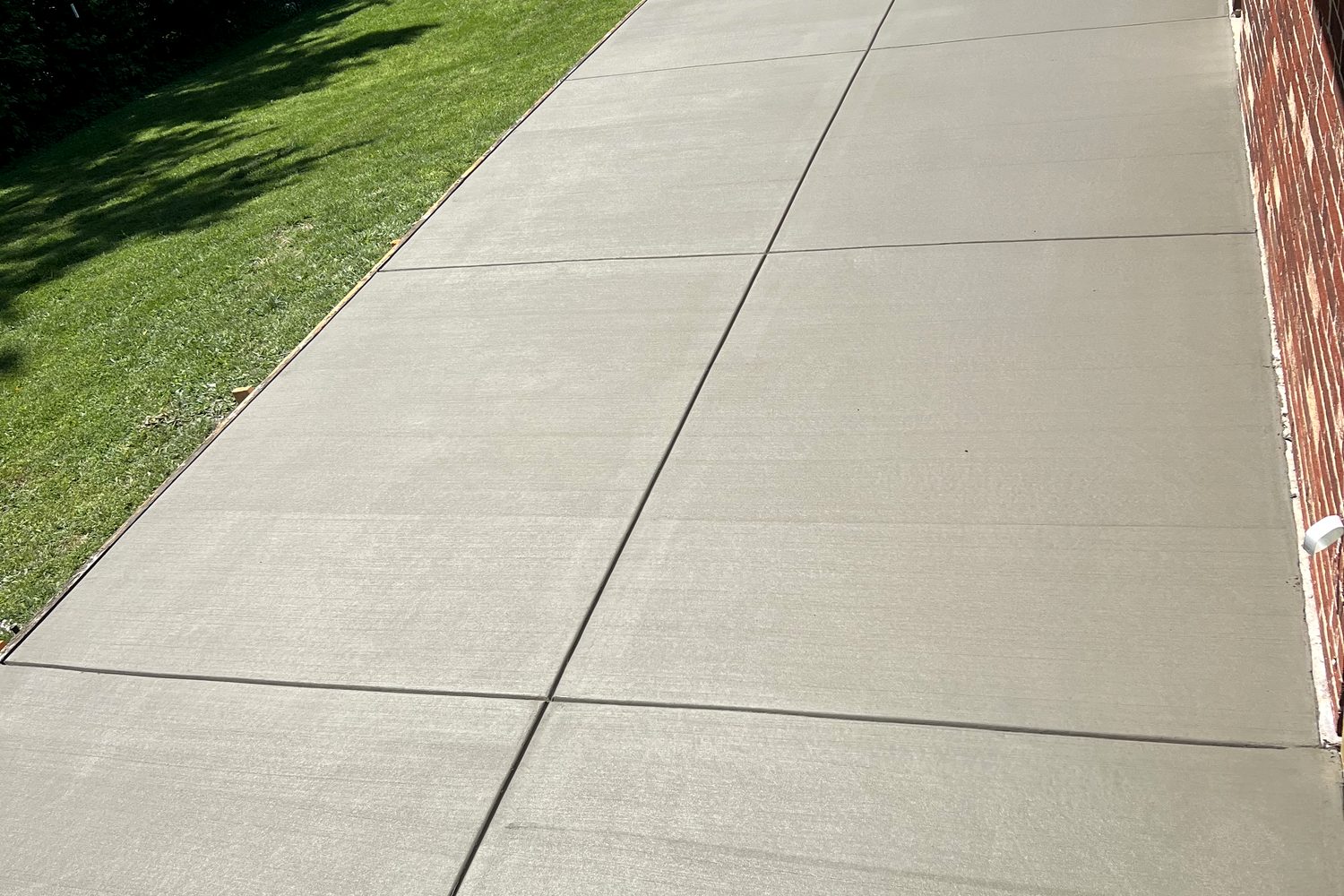
- Control jointsTooled into the fresh concrete on every patio, so cracking follows the joints. Saw-cut joints are available as an upgrade.
- Pitched away from the houseThe surface sheds water away from the house.
- Sealed on a return visitOnce the concrete has cured, we come back and seal it. It’s part of every patio, not an upgrade.
- Dirt and sod to the edgeWhen the forms come out, we backfill the edge with dirt and lay a sod border. No raw trench and no landscaping left for you.
- Utilities located firstDig-Rite (Missouri One Call) marks the public utilities before anything goes in the ground.
- One-year written warrantyConcrete flatwork carries its own one-year Concrete Flatwork Limited Warranty, written into your contract.
What’s under the surface
Section view · illustration only, not to scale.
Pick your finish
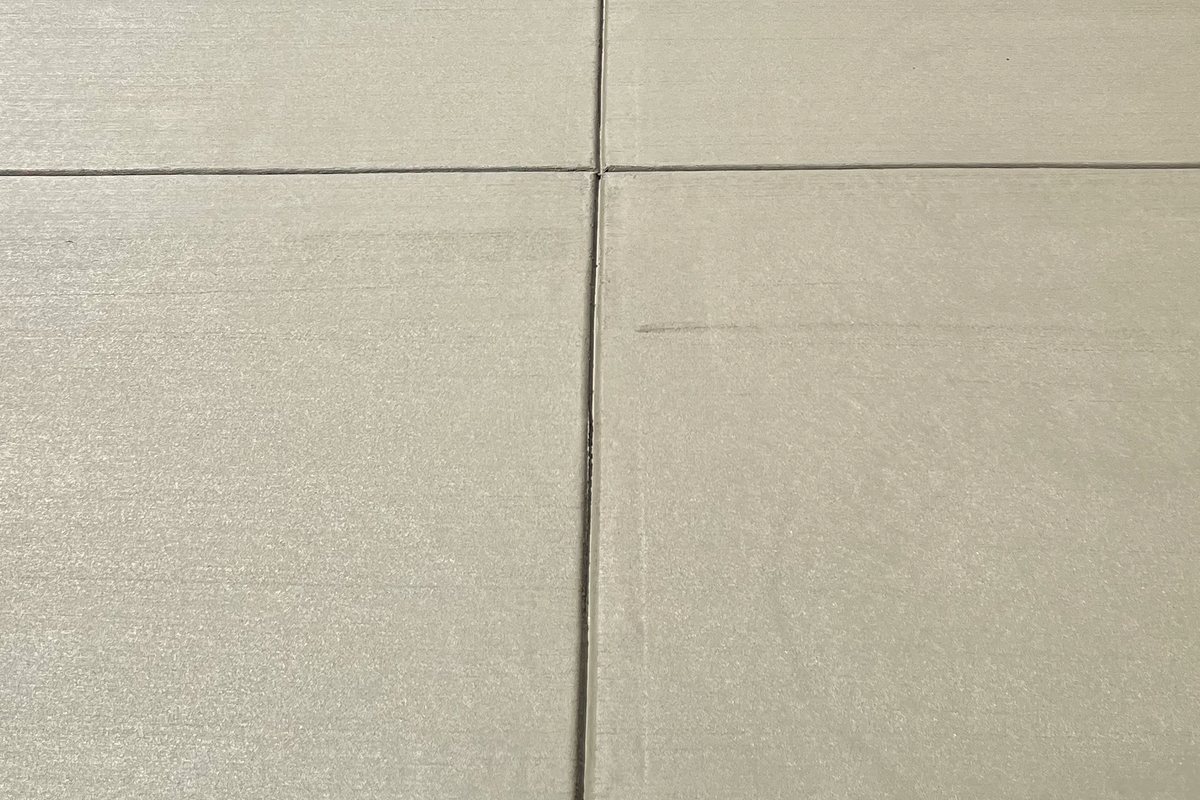
Broom finish
The classic. A broom is pulled across the fresh concrete to give it texture, so it has good footing when it’s wet.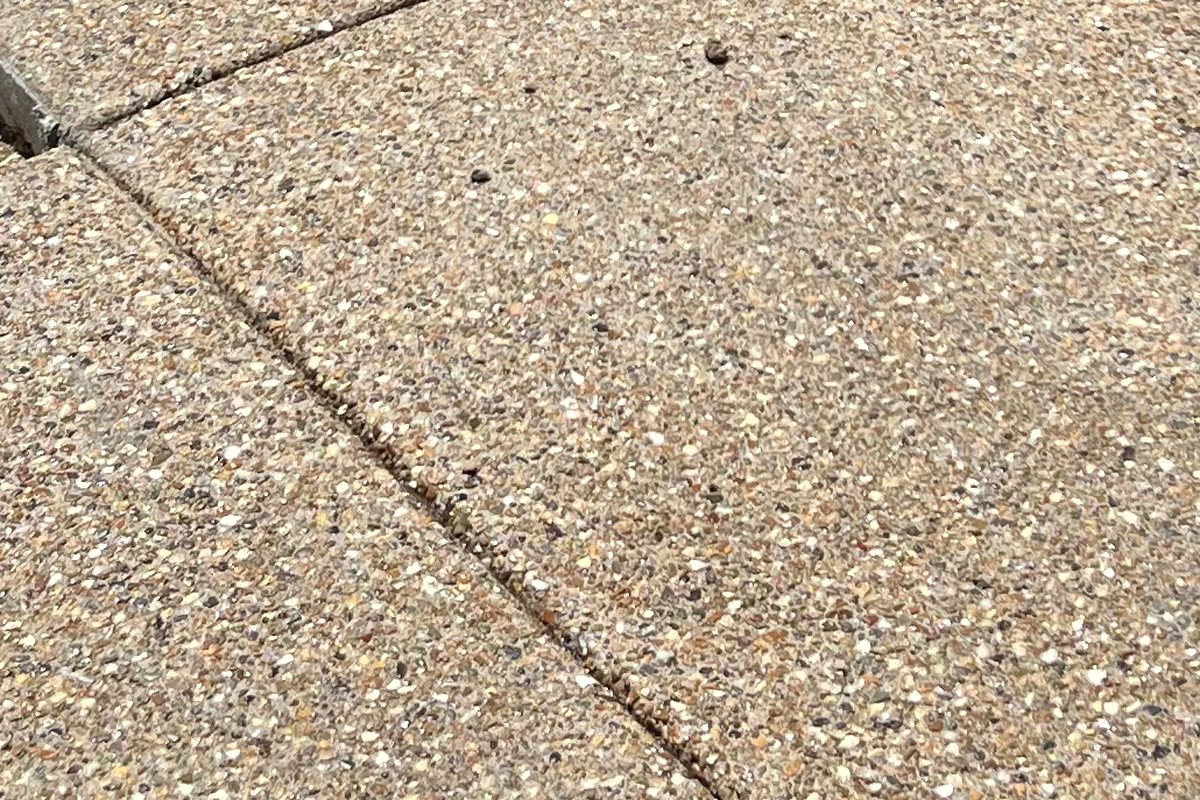
Exposed aggregate
The top layer of cement is washed off to show the stone in the mix. Textured, slip-resistant, and it hides dirt well.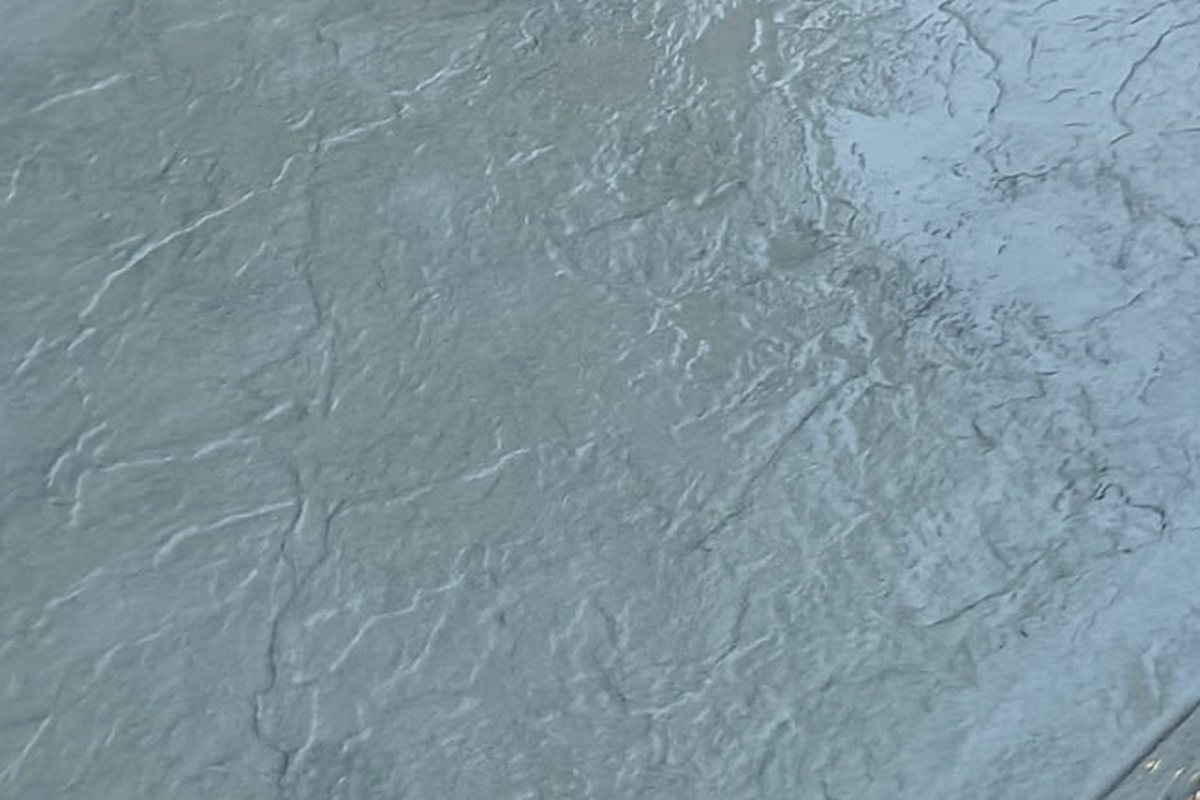
Stamped and stained
A stone or tile pattern is pressed into the concrete, then stained. The look of pavers in one solid slab.How we handle cracking
Every slab shrinks as it cures, and shrinkage is what cracks concrete. Control joints don’t stop that movement. They decide where it happens, by giving the slab a straight weak line to crack along below the surface.
Every patio gets control joints tooled into the fresh concrete as it is finished. If you want the most control over cracking, upgrade to saw-cut joints: the grid is laid out with a laser, then cut with a saw to a quarter of the slab depth once the concrete is hard enough to cut and before it cracks on its own. The lines come out straighter, the panels come out square, and cracking stays in the joints.
We are also picky about the concrete itself. Our orders go in with instructions for no hot-batched concrete — leftover concrete from another job mixed into a new load — and a truck that shows up with it gets sent back.
What we won’t do is promise a crack-free patio. Nobody can. We plan the cracking, steer it, and put it where you won’t be looking at it.
The best time to fix your drainage is before the pour
While the ground is open, we can run buried drain lines from your downspouts under the new patio. Downspout water goes into pipe and comes out away from the house instead of dumping across your new concrete. Once the concrete is down, that chance is gone. It’s an optional add-on — ask about it when we come out. More on gutter drainage.
Good to know before we pour
Color. Plain concrete cures out bright and then mellows. Color mixed in at the plant runs all the way through the slab. A new slab next to old concrete will not match — new concrete never matches weathered concrete.
Cure time. Stay off it for a few days, and keep cars and heavy loads off for longer. We’ll give you the exact days for your pour.
Old concrete. If there’s an old pad or walk where the patio goes, we break it out, haul it off, and pour through it as one slab — no cold joint and no color line down the middle.
Access. We usually bring a mini skid through a side gate. If the opening is too tight, a fence section comes down and goes back up when we’re done.
Ready for a number?
Use the patio calculator for your price, or text us photos of the spot and we’ll talk it through.