



Carpenter Bees and Carpenter Ants
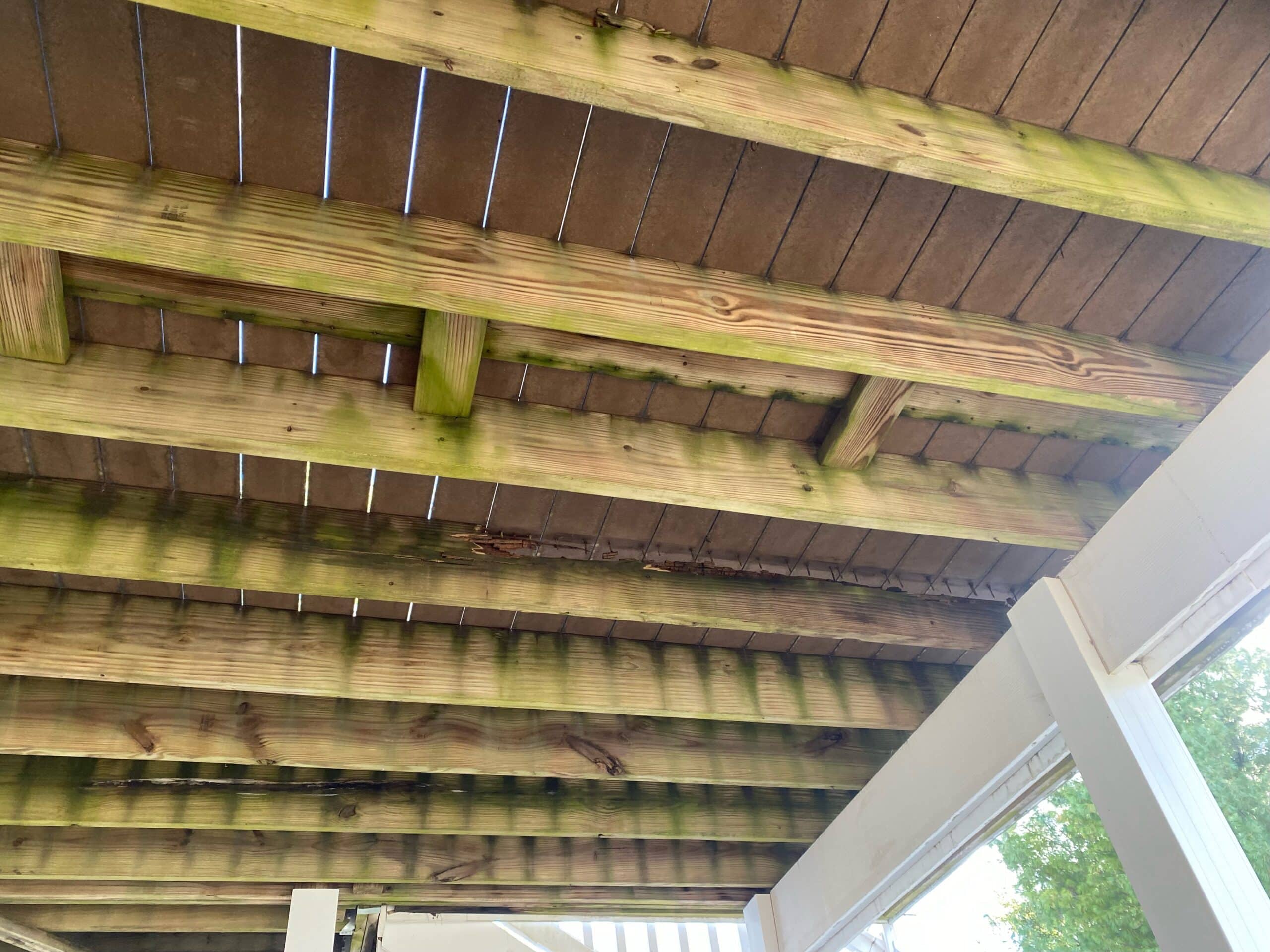
Two completely different problems that get talked about as one. One drills into sound wood. The other only moves into wood that is already wet. Telling them apart tells you whether you have a pest problem or a water problem.
Carpenter bees
The thing cedar buyers are not told. Cedar is sold as naturally rot and insect resistant. The rot half is true. The insect half does not hold up against carpenter bees — whatever it is in cedar that fights fungus does nothing to a bee. Cedar is soft, it is a popular decking wood, and it usually gets left bare. That is exactly the combination they are looking for.
What actually attracts them
Two things, and the species of wood is not really one of them. They want wood that is soft and wood that is bare or weathered. Pine, fir, redwood and cedar are all on the list. Painted wood and hardwood are not.
They also want something to tunnel into, so they favor material at least two inches thick. That puts the risk on your rail members, posts, joists and beams rather than on the deck boards.
Does pressure treatment stop them?
It helps a great deal. It does not make wood bee-proof, and if the alternatives run out they will bore into treated, painted or varnished wood.
But here is what matters when you are choosing lumber: nobody frames a deck out of bare, untreated pine. The pine option is pressure-treated pine. So the real comparison is cedar against treated — and in the field that difference is not subtle. We rarely see carpenter bee damage on pressure-treated framing. We see it on cedar regularly.
Where they go on a deck
| Component | Risk |
|---|---|
| Rail members and posts | Highest. 2x material, often bare, and vertical surfaces stay out of direct weather. |
| Fascia and trim | High. Bare edges and exposed end grain, and it is where you notice the holes first. |
| Undersides of joists, beams, rail caps, stair treads | High, and usually missed. They prefer protected, weather-shielded surfaces — which describes the entire underside of your deck. |
| Deck boards | Lowest. Horizontal, sun and rain exposed, and usually thinner than they prefer. |
The holes are not cosmetic
A carpenter bee hole looks harmless. It is a clean, round, roughly half-inch hole that looks like someone drilled it and walked away. The part you cannot see is what is behind it.
The bee drills straight in about an inch, then turns and tunnels with the grain. Those galleries get reused and extended year after year by successive generations, and in wood that has been worked for a long time they run feet, not inches. That is structural material removed from the inside of a rail post or a beam, and there is no way to look at the outside and know how much is gone.
Then the water gets in. Every hole is an open path into the middle of a board, and bored holes soak up water far faster than a finished face does. Now the wood is wet on the inside where it has no way to dry, which is exactly the condition rot needs. Woodpeckers finish the job — they hunt the larvae, and they will open a neat half-inch hole into a torn-out gouge several inches long.
So the hole itself is the least of it. What you are actually looking at is a tunnel network inside a structural member that is collecting water it cannot get rid of.
Finish it right: oil-based stain, never a solid stain
This is the finish advice we argue with people about most, and it is the one that costs the most money when it gets ignored.
A solid-color stain looks like the smart choice. It covers everything, it hides mismatched boards, and the can promises it lasts longer. What it actually does is form a film on top of the wood, the same as paint. On a surface you walk on, that film does not stay intact — it cracks, it wears through in the traffic lanes, it lifts at the board edges. Then water gets underneath it and cannot get back out. The wood sits wet under a sealed skin, and wood that cannot dry rots faster than wood with no finish on it at all.
We use a penetrating oil-based stain. It soaks into the wood instead of sitting on top of it, so the boards can still dry out after it rains. When it wears, it fades evenly instead of peeling, which means recoating is a wash-and-recoat rather than a strip-and-start-over.
Where paint does belong
Against carpenter bees, paint genuinely works — better than stain does. So put it where the bees actually go and where you do not walk: rails, posts, fascia, skirting, and exposed beam faces, in an oil-based or polyurethane paint. Penetrating oil stain on the floor. Two products on one deck, and it is the combination that holds up.
Timing, for St. Louis
Carpenter bees run on a calendar, and there are two windows where a weekend of work is worth more than a whole season of spraying.
Carpenter ants are a symptom, not a pest problem
Carpenter ants do not eat wood. They excavate it to nest, which is why their galleries are smooth-sided and clean — no soil, no pellets. That is also how you tell them from termites.
The part that makes them useful to you: they need the wood to already be damp, at roughly 15% moisture content or higher. Decay fungi need about 30%. Which means carpenter ants show up before you can see any rot at all.
So if you find carpenter ants in a deck, do not start with a spray. They are telling you water is sitting somewhere it should not be — a ledger that was never flashed, a low spot that will not drain, a planter sitting directly on the boards, debris packed into the board gaps holding water on the joist tops. Kill the ants and leave the water, and you will be doing it again next year with more rot to show for it.
Pressure-treated framing helps, because it resists the decay that softens wood into something ants can work. It is not a guarantee. Field-cut ends and drilled holes are untreated — the treatment never reached the middle of the board — and wet, debris-packed or already-rotted treated wood will host a nest just fine.
What we build in to stay ahead of both
The useful thing about these two problems is that most of the fixes are the same fixes, and they are structural rather than chemical.
- Keep wood out of ground contact. Ground contact wicks moisture straight past the line where ants can move in.
- Do not build water traps. Flashed ledgers, joist tape, and capped rails all exist for this one reason.
- Close open ends and plug old galleries. An open hollow rail end is an invitation. A hole plugged in early spring is a colony that never starts.
- Correct-grade treated lumber anywhere wood meets soil or masonry.
Worth asking any contractor at the estimate. Where is the water going to go, and how does this deck dry out after it rains? If they cannot answer that in plain language standing in your yard, the rest of the quote does not matter much.
Got holes in your railing already?
We repair carpenter bee damage and we will tell you straight whether a member needs replacing or just sealing. If it is ants, we will find the water first.