Veranda Vinyl Railing in St. Louis, MO

For vinyl railing we use Veranda. It is the practical choice on a pressure-treated deck — clean white lines, nothing to paint, and a price that leaves budget for the parts of the deck you cannot see.

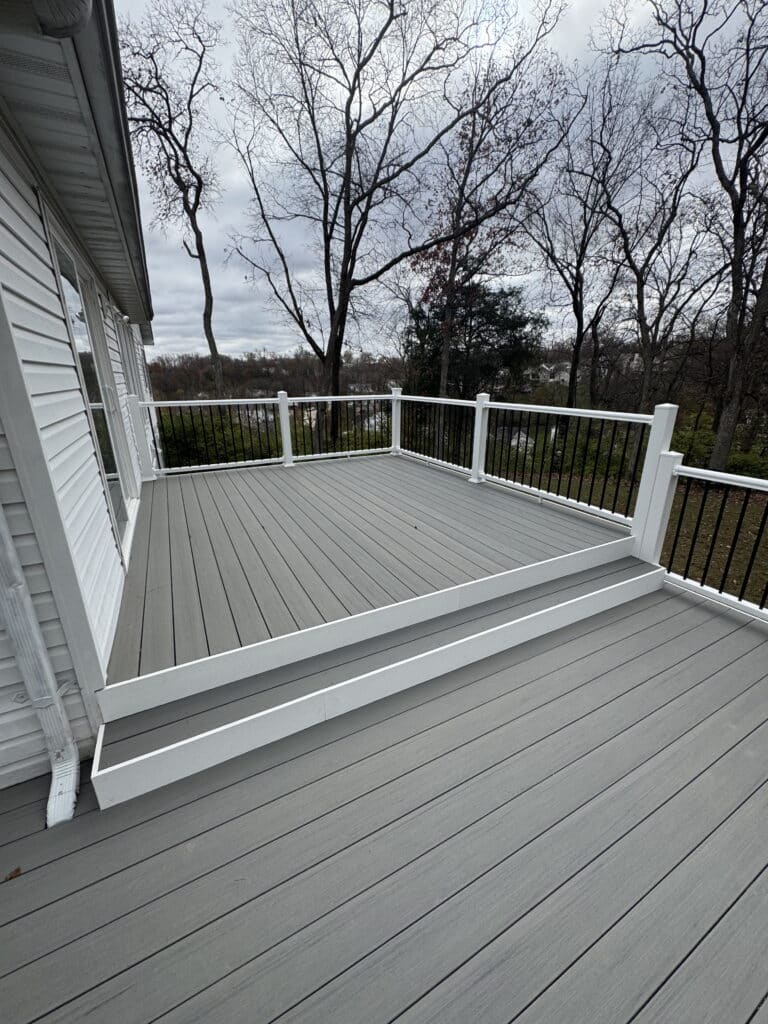
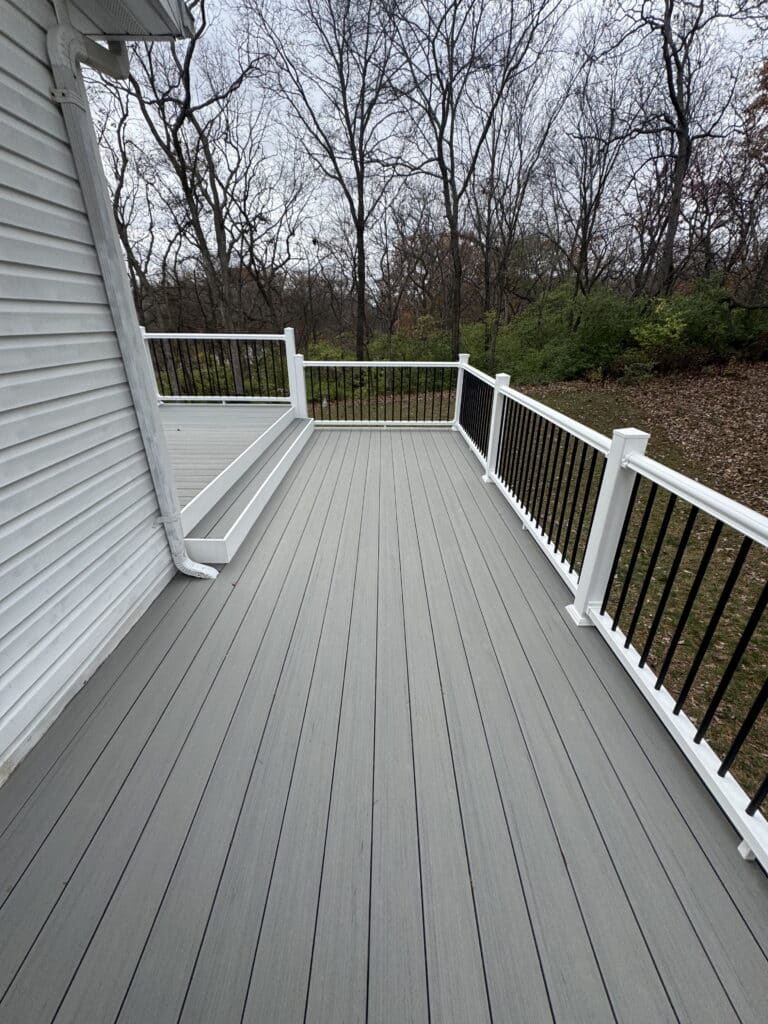
Gray composite deck with white vinyl railing and black balusters
White vinyl railing with black balusters on a gray composite deck — one of ours. Every photo on this page is a deck we built.
0Coats of paint, ever
36” / 42”Rail heights
6’ / 8’Standard section kits
SoapThe entire maintenance plan

What it actually is

Veranda’s rail is a PolyComposite vinyl built on what they call Composicore — no wood fiber in it at all. That matters more than it sounds. A lot of budget railing uses a wood-flour composite, and wood flour is what mold and rot feed on. With no wood in the material, the two most common ways a railing fails simply do not apply. Veranda states it resists warping and mold for exactly that reason.

These are code-approved kits, engineered and tested as a system — rails, balusters, and brackets designed to work together. That is not the same thing as a site-built wood rail, where the strength depends entirely on who swung the hammer.

Configurations

Item Spec
Material PolyComposite vinyl with Composicore — no wood fiber
Rail heights 36” and 42”
Kit lengths 6’ and 8’ sections
Applications Level kits and stair kits, with matching bracket kits
Baluster options Standard vinyl balusters, or black metal balusters for a two-tone look against white rail
Posts Post sleeves finish the structural post inside them — the sleeve is the look, the post underneath is the strength
Code Sold and tested as a code-approved railing system

The colors

Vinyl is a narrow palette by design. That simplicity is part of why it stays looking new.

White
Black
Bronze
White rail, black balusters

Availability varies by product line and by what is in stock when we order. We bring samples to the estimate and confirm the exact configuration before anything gets ordered.

Installation notes that matter

Requirement Why
48-hour acclimation on site Vinyl expands and contracts. Letting material sit in the conditions it will live in, before it gets cut, is what keeps joints tight through a Missouri summer.
Crush blocks in long sections Any rail section wider than 36” between connection points needs internal crush blocks — one for shorter runs, two for sections 72” and longer. They sit directly under balusters so the rail cannot compress when the brackets are tightened. Skip them and the rail sags.
Carbide-tipped blade A sharp carbide blade gives a clean cut. A dull blade tears vinyl and you see it forever.
Post attachment The sleeve is cosmetic. What holds the railing is the post and its connection to the frame — and guardrail posts are the single most common source of serious deck injury.

Our work

Veranda vinyl railing on real St. Louis decks.

White vinyl deck railing with black balusters along a gray composite deck
White rail with black balusters — the two-tone look, without paint.
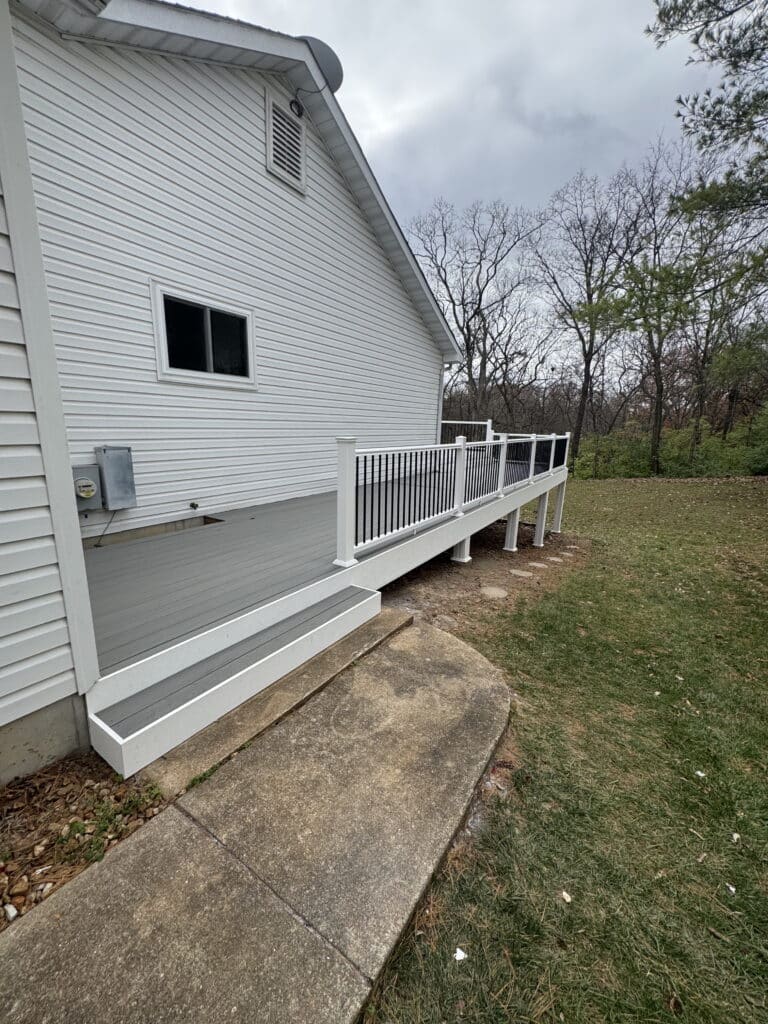
Exterior view of a gray composite deck with white vinyl railing
From the yard. White rail reads clean against white trim and siding.
White vinyl railing posts and composite stair treads
Posts and stair treads. The sleeve is the look; the post inside is the strength.

Care

Soap and water, periodically. A pressure washer should only be used to wet and rinse — never to blast debris off vinyl rail. For a stubborn stain, a commercial cleaner containing sodium percarbonate or oxalic acid is the right chemistry.

Warranty

Veranda railing carries a manufacturer’s limited warranty, and the exact term and coverage depend on which line you choose — we give you the specific warranty document for your product rather than a number that might not match what is on your deck. Our own workmanship warranty applies either way: one year on pressure-treated builds, three years on composite decks and all other work, covering the installation itself.

Vinyl or aluminum? Vinyl is the value choice and it looks right on a white-trimmed house with a pressure-treated deck. Aluminum costs more, offers twelve colors instead of a few, carries a lifetime limited warranty, and its thin square balusters give up much less of the view. On a composite deck we almost always steer people to aluminum — if you are spending that much on the surface, the railing is not the place to save.

Not sure which fits your project?

We bring samples of both to the estimate and price them side by side.

Call 314-440-8873Request an estimate